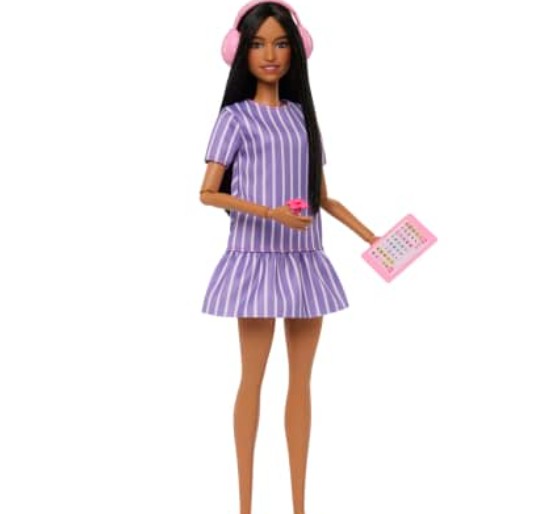
Mattel has announced the commercialization of an autistic Barbie, integrated into the Barbie Fashionistas line. This is neither a limited edition nor a symbolic prototype. It is a standard retail product, intended for mass distribution alongside other inclusive Barbie models.
The doll is designed to represent autism without caricature. It features visual and functional elements inspired by realities commonly experienced by some autistic people, including sensory accessories, comfort-oriented clothing, and graphic cues associated with neurodiversity. Mattel states that these design choices were developed in collaboration with specialists and organizations connected to the autism community.
What factually differentiates this doll from previous ones
The initiative is based on three concrete elements:
-
Co-design: Mattel reports working with autism experts and autistic individuals to avoid stereotypical representation.
-
Indirect educational role: the doll does not explain autism; it normalizes its presence within a familiar play environment.
-
Full commercial integration: it is sold through the same channels as other Barbie products, without activist framing or separate marketing treatment.
This is a mainstream consumer product, not a symbolic or isolated statement.
Why this initiative reflects continuity rather than disruption
For several years, Barbie has moved beyond a single idealized model. The brand has already released dolls representing:
-
visible physical disabilities,
-
different body types,
-
diverse ethnic backgrounds,
-
medical or accessibility-related conditions.
The autistic Barbie follows this established trajectory. It does not introduce a new category; it extends a range already oriented toward human diversity.
Why the debate is limited, even among critics
Unlike earlier initiatives, this announcement has generated relatively little controversy. Several factual reasons explain this restrained reaction:
-
Autism is widely recognized as a spectrum, encompassing varied experiences, which reduces expectations of a single “correct” representation.
-
The representation is non-prescriptive: the doll does not define what it means to be autistic; it simply shows that autistic people exist alongside others.
-
Nothing is replaced or removed: no existing Barbie is withdrawn. The product is added, not substituted.
Common criticisms such as marketing opportunism or oversimplification still exist, but they remain marginal and loosely structured, partly because Mattel has avoided overtly activist messaging around the product.
What this Barbie concretely signals about the evolution of mass-market toys
From an industrial and cultural standpoint, this release confirms a clear shift:
-
Toys are no longer limited to idealized projections.
-
They increasingly function as tools of social familiarity, without explicit educational claims.
-
Diversity is no longer framed as an exception, but as a normal variable within a product catalog.
In this sense, the autistic Barbie is not a revolution. It illustrates a change that is already established in how major brands design products: reflecting reality without commentary, and leaving meaning to emerge through use.