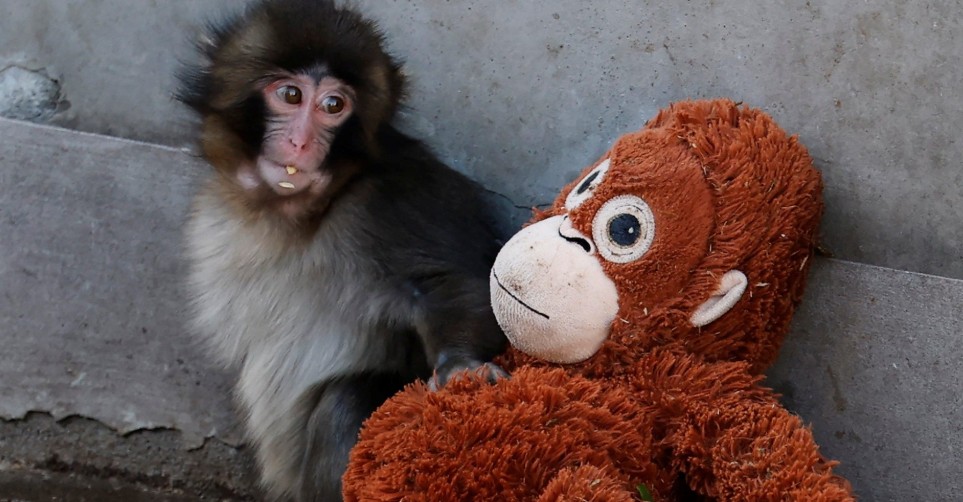
A seven-month-old macaque named Punch managed to do what most brands spend years trying to engineer.
He made a $14.99 plush toy sell out around the world.
No ad campaign.
No influencer partnership.
No product launch strategy.
Just a short video.
Punch, who was abandoned at birth and raised by keepers at Ichikawa City Zoo in Japan, was given a stuffed orangutan for comfort. In the clip that spread across social media, he’s dragged across his enclosure by a larger macaque. A few seconds later, he scrambles back to his plush and clings to it.
It’s a small moment. But it feels big when you watch it.
And that’s what changed everything.
Why Punch The Monkey Hit So Hard
This wasn’t just another “cute animal” video.
It felt raw.
Primates form attachment bonds, just like we do. For decades, researchers have observed that young monkeys separated from their mothers will cling to soft surrogate objects for reassurance. When people saw Punch hugging that plush, they didn’t need a scientific explanation.
They recognized the emotion instantly.
He didn’t look playful.
He looked startled.
Then safe.
That shift — from distress to comfort — is universal. You don’t need subtitles for it. You just feel it.
Within days, millions had.
The Ikea Effect Nobody Saw Coming
The plush Punch hugged is part of the Djungelskog line from Ikea.
Retail price in Canada: $14.99.
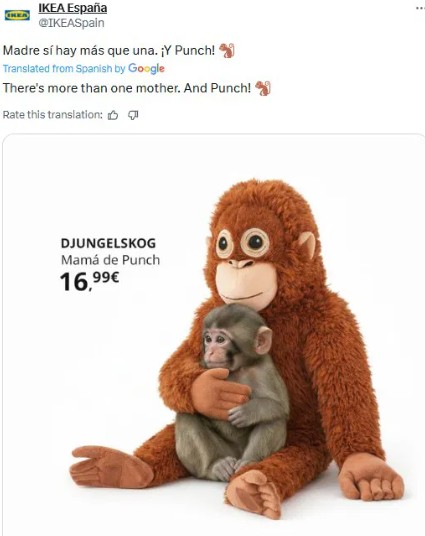
After the video took off, the orangutan disappeared from online stores.
Then came the resellers:
– Listings at $100
– Some pushing as high as $301
This wasn’t a slow build. It was a sudden rush.
The formula is simple:
A strong emotional story
A clearly recognizable product
Limited stock
Social media momentum
When those elements collide, something ordinary becomes symbolic.
People weren’t just buying a stuffed animal. They were buying a connection to the moment.
We Didn’t Buy a Toy. We Bought What It Represented.
It’s easy to roll your eyes and call this irrational.
But it’s not.
Humans attach meaning to objects all the time. We keep concert tickets, old hoodies, childhood toys — not because of their material value, but because of what they represent.
In Punch’s case, the plush became a symbol of comfort.
In a digital world saturated with outrage, conflict, and noise, this story offered something rare: softness. A simple image of vulnerability and reassurance.
That cuts through.
Owning the plush wasn’t about consumerism alone. For many, it was about holding onto the feeling the video created.
Ikea’s Response Was Subtle and Smart
Ikea posted about “Punch’s comfort orangutan” and wrote, “We’re ALL Punch’s family now.”
That was it.
No limited drop.
No price increase.
No flashy marketing push.
Just recognition of the moment.
They didn’t try to control the story. They acknowledged it. That restraint made the response feel human instead of calculated.
In viral moments, authenticity travels further than strategy.
Punch The Monkey and the Speed of Modern Emotion
The most striking part of this story isn’t that the plush sold out.
It’s how fast it happened.
One zoo video in Japan led to:
Global media coverage
Empty retail shelves
Resale price spikes
Mass brand visibility
All in less than a week.
That’s how modern attention works.
When a story is simple, visual, and emotionally clear — and when there’s a tangible object attached to it — people move quickly.
Punch didn’t plan a product launch.
He just reached for comfort.
But in doing so, he revealed something powerful about today’s economy:
We don’t always buy what we need.
We buy what means something.
And sometimes, that meaning is found in a baby monkey hugging a stuffed orangutan.