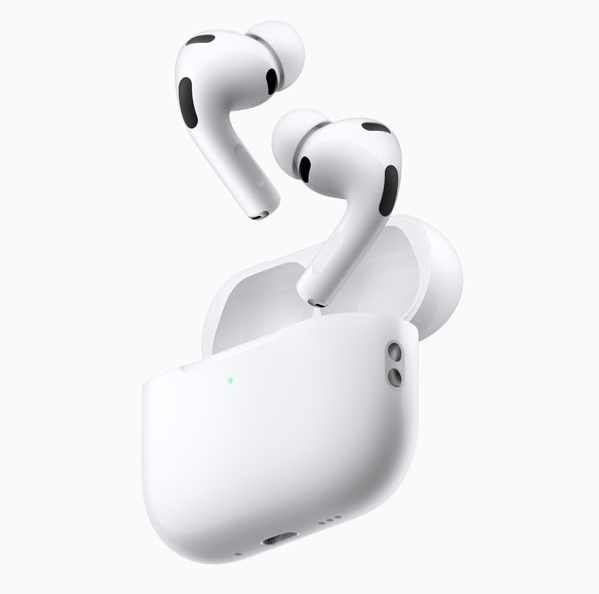
Apple has taken a bold step in transforming the way we connect with people around the world. With the release of the AirPods Pro 3, the company introduced a groundbreaking feature called Translation Conversation. This tool allows users to translate spoken conversations directly in their ear, bridging language gaps instantly.
For years, earbuds were primarily seen as accessories for music and calls. Now, with AirPods Pro 3, they’ve evolved into personal communication assistants that can handle multilingual interactions with ease. As one tech reviewer from CNET described, “it’s like having a personal interpreter sitting quietly inside your ear.”
How Translation Conversation Works
At its core, the feature is designed for simplicity. Once activated, Translation Conversation listens to spoken words, processes them in real-time using Apple’s AI-driven translation engine, and delivers the translated version directly to the listener’s ear.
The process unfolds in three steps:
-
Capture – AirPods pick up speech in one language.
-
Translate – Apple Intelligence instantly processes the content.
-
Deliver – The translated message plays back in the target language.
This approach eliminates the need for fumbling with apps or typing into a phone. Instead, users enjoy a natural flow of conversation.
Supported Languages and Accessibility
Apple confirmed that Translation Conversation works with dozens of popular languages at launch. While the company hasn’t disclosed the full list, early reports suggest support for widely used languages such as English, Spanish, French, Mandarin, German, and Japanese.
This broad support ensures that travelers, professionals, and students can engage in meaningful conversations across most major regions. It also reinforces Apple’s commitment to accessibility, giving users new ways to communicate without barriers.
Travel Without Language Barriers
Picture yourself arriving in Paris without speaking French. With AirPods Pro 3, you can order food, ask for directions, or chat with locals without awkward pauses.
Translation Conversation turns international travel into a smoother, more confident experience. Tourists no longer need to rely on phrasebooks, smartphone screens, or hand gestures to be understood. Instead, conversations unfold naturally, making cultural exchanges more authentic.
As 9to5Mac reported, “Translation Conversation blurs the lines between earbuds and digital assistants, setting a new standard for wearable technology.”
Business Applications
The value of Translation Conversation extends well beyond tourism. In professional environments, it can dramatically improve collaboration and customer interactions:
-
Meetings: Global teams can communicate freely without waiting for live interpreters.
-
Sales and support: Businesses can serve international clients more effectively, building trust with real-time assistance.
-
Remote collaboration: Distributed teams working across multiple languages gain a seamless way to stay connected.
This isn’t just about convenience — it’s about unlocking new opportunities for international growth.
Apple’s AI Push and Privacy Focus
Translation Conversation is powered by Apple Intelligence, the company’s suite of generative AI models optimized for speed and privacy. Unlike some competitors, Apple emphasizes on-device processing whenever possible.
That means many translations happen locally, reducing reliance on cloud servers and keeping sensitive conversations private. For users concerned about digital privacy, this is a key differentiator.
Apple executives highlighted this during the launch, saying: “We want AirPods to be more than music — we want them to help people connect in meaningful ways.”
Comparison: AirPods vs. Competitors
Apple isn’t the first to experiment with live translation in earbuds. Google’s Pixel Buds and Samsung’s Galaxy Buds have offered similar features, but Apple’s execution feels different:
-
Pixel Buds rely heavily on Google Translate through a smartphone app. The setup often feels clunky compared to Apple’s seamless, hands-free design.
-
Galaxy Buds offer translation through Bixby and other apps, but adoption has been limited.
-
AirPods Pro 3 integrate translation directly into the Apple ecosystem, making it as natural as using Siri or AirPlay.
This tight integration is what gives Apple an advantage. As one early user put it: “Translation Conversation doesn’t feel like a feature. It feels like a superpower built into my daily routine.”
Everyday Scenarios Where It Shines
-
Education: Students learning a new language can reinforce comprehension by hearing instant translations.
-
Healthcare: Doctors can communicate more clearly with patients who don’t share their language.
-
Social connections: Meeting someone new abroad becomes easier and more enjoyable.
These scenarios highlight how AirPods Pro 3 can impact real lives, beyond just tech enthusiasts.
Limitations to Consider
While Translation Conversation is a breakthrough, it isn’t flawless. Users may encounter:
-
Pauses between sentences, since the AI processes one speaker at a time.
-
Contextual challenges, particularly with slang, idioms, or highly technical vocabulary.
-
Dependence on connectivity for less common languages or when updates are needed.
Still, reviews from early testers suggest impressive accuracy for most everyday conversations, with Apple expected to refine the feature further.
Frequently Asked Questions (FAQ)
1. Which AirPods support Translation Conversation?
Currently, the feature is exclusive to the AirPods Pro 3, thanks to their upgraded chip and integration with Apple Intelligence.
2. Do I need an iPhone to use Translation Conversation?
Yes. The feature works best within the Apple ecosystem, leveraging iOS translation frameworks.
3. How many languages does it support?
Apple has not released the full list, but reports suggest dozens of widely spoken languages are available at launch, with more expected through software updates.
4. Does it work offline?
Some translations can be processed on-device, but full functionality, especially for less common languages, may require internet connectivity.
5. Is this feature included in the standard AirPods Pro 3 price?
Yes, Translation Conversation comes built-in with no additional subscription.
The Future of Earbuds
With features like spatial audio, adaptive noise control, and now real-time translation, AirPods Pro 3 are no longer just earbuds. They are wearable AI companions designed to make everyday life easier.
The Translation Conversation feature, in particular, sets a new benchmark for the entire industry. Just as noise cancellation once redefined what we expect from premium earbuds, live translation could become the next must-have standard.
Final Thoughts
Translation Conversation is more than a clever add-on — it’s a tool that could reshape the way we interact across languages. For travelers, students, and businesses, it offers a practical solution to a universal challenge.
As technology continues to evolve, one thing is clear: Apple has positioned the AirPods Pro 3 as not just another set of earbuds, but as a gateway to global communication.
Bottom line: The AirPods Pro 3’s Translation Conversation may be the most significant feature Apple has ever added to its earbuds — a leap forward in making communication truly borderless.