On January 1, 2026, DeepSeek published a new research paper that quickly caught the attention of the AI community. Titled mHC (Manifold-Constrained Hyper-Connections), the paper introduces an evolution of the Transformer architecture with a clear goal: make training more stable, more predictable, and significantly cheaper.
This is not an academic exercise for its own sake. The paper fits into a now-familiar DeepSeek strategy, where technical research consistently comes before the release of a new flagship model.
mHC: Why Revisit Transformer Architecture Now
For several years, progress in large language models relied heavily on scaling. More parameters, more data, more compute. That approach is increasingly showing its limits, both economically and technically.
The mHC paper starts from a straightforward observation:
“The marginal gains from scaling are becoming increasingly expensive.”
mHC introduces manifold-constrained hyper-connections, a structured way to guide how information flows inside the network. Instead of increasing model size, the focus is on extracting more value from existing capacity.
DeepSeek highlights three main benefits:
-
more stable convergence during training
-
lower variance between training runs
-
reduced overall training cost
Stability as a Cost Multiplier
One of the most important aspects of the paper is stability. Traditional Transformer architectures can become highly sensitive to hyperparameters at scale. Every instability translates into wasted compute.
With mHC, DeepSeek aims to reduce these inefficiencies. The expected impact is concrete:
-
fewer failed or suboptimal training runs
-
less GPU time wasted
-
higher return per trained token
In a context where compute remains a strategic bottleneck, this type of architectural refinement carries real weight.
From Training to Inference: A Structural Shift
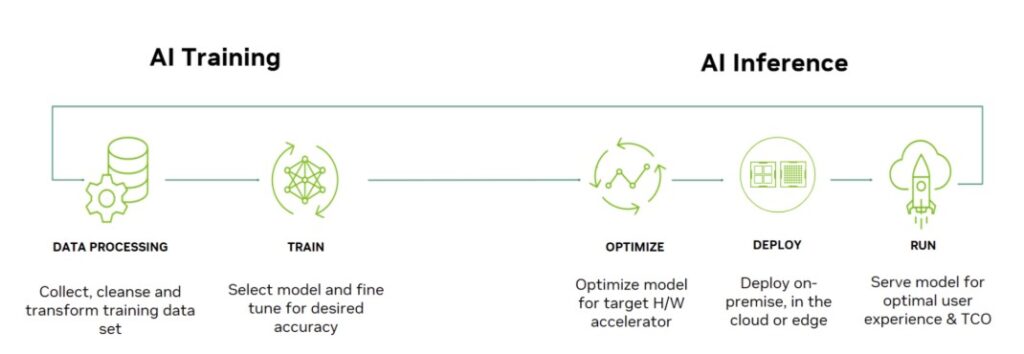
The timing of mHC is not accidental. The industry is undergoing a broader cost shift:
-
training is becoming more optimized
-
inference is emerging as the dominant cost driver
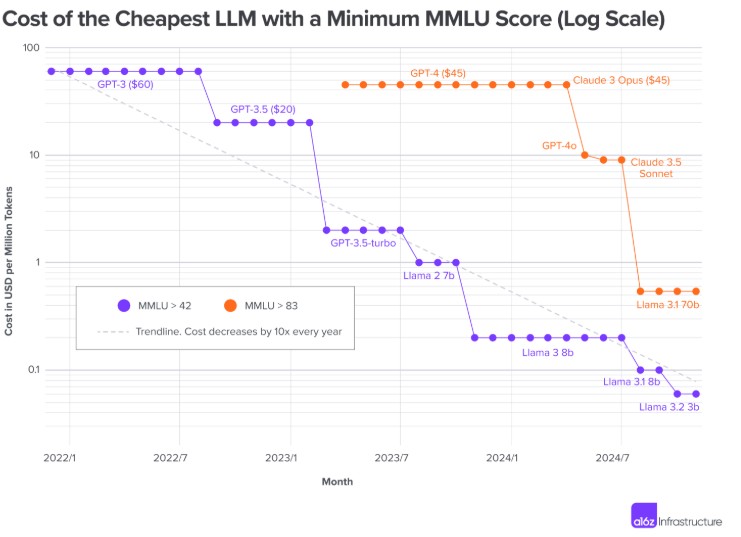
At the same time, token prices continue to collapse. Over the past three years, they have dropped by nearly 1,000x, making large-scale usage feasible without runaway budgets.
DeepSeek’s approach illustrates this new reality well:
“‘Architectural optimization enables usage growth, not just benchmark gains.”

A Playbook DeepSeek Has Perfected
The mHC paper follows a pattern DeepSeek has already executed multiple times:
-
release a technical research paper
-
validate the approach publicly through research
-
ship a flagship model weeks later
Founder Liang Wenfeng personally published the paper on arXiv, just as he did before the R1 and V3 releases. This is a deliberate signal: scientific credibility comes first, marketing later.
Recent history shows that this approach can have tangible market impact, including ripple effects felt by companies like Nvidia.
What mHC Signals for the Next DeepSeek Model
A new DeepSeek flagship model is expected by mid-February. Unsurprisingly, mHC is likely to be one of its core technical building blocks. The real question is not just whether the model will be stronger, but whether it will be:
-
more stable in production
-
cheaper to run at scale
-
easier to deploy across real-world workloads
If so, DeepSeek will continue to shape the current phase of LLM evolution, where careful engineering replaces blind scaling.
A Strong Signal for 2026
With mHC, DeepSeek sends a clear message to the AI ecosystem. Progress no longer comes from model size alone, but from deliberate architectural choices.
If 2025 marked an economic turning point for AI, 2026 is shaping up as a year of technical consolidation. And DeepSeek appears determined to stay at the forefront.