
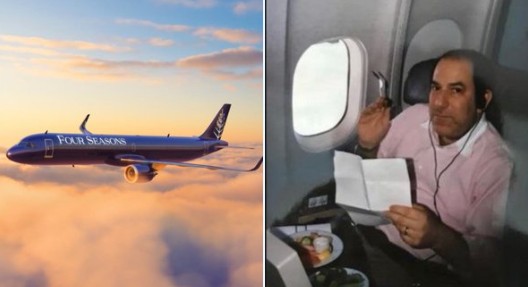
In 1987, an American businessman made a decision that many considered excessive. He paid $250,000 for a lifetime first-class pass with American Airlines.
At the time, it looked like a wealthy executive indulging in a luxury perk. Decades later, it became one of the most fascinating stories in modern aviation economics.
Who Was the Man Behind the Lifetime Pass?
The traveler was Steven Rothstein, an investment banker who purchased what American Airlines called the “AAirpass,” a lifetime ticket allowing unlimited first-class travel, anywhere the airline flew.
For an additional $150,000, he added a companion option, allowing him to bring a guest on every flight at no extra charge.
In the late 1980s, this offer targeted ultra-frequent business travelers. The implicit assumption was simple: even heavy travelers have physical limits.
Rothstein proved that assumption wrong.
More Than 10,000 Flights: When the Math Turns Brutal
Over the years, Rothstein reportedly took more than 10,000 flights. Estimates suggest the airline ultimately provided around $21 million worth of first-class seats under his pass.
The financial equation is striking.
$250,000 paid upfront in 1987.
An estimated $21,000,000 in flight value consumed.
Even accounting for inflation and modern yield management, the deal became economically painful for the airline.
The pricing model relied on averages. Rothstein optimized the contract. He booked last-minute flights, complex itineraries, and consistently used the companion benefit to maximize value.
Nothing about it was illegal. It was contractual.
Why American Airlines Ultimately Canceled the Pass
In 2008, American Airlines revoked his lifetime pass, citing “abuse.”
The airline argued that he made speculative or strategic bookings, particularly involving the companion benefit, allegedly reserving seats that were not always used.
Rothstein sued the airline. The dispute was eventually settled out of court under confidential terms.
The core issue was not simply profitability. It was interpretation. At what point does aggressive optimization of an unlimited contract become abuse?
What This Story Reveals About “Lifetime” Business Models
This case is more than an aviation anecdote.
In the 1980s and 1990s, several companies experimented with lifetime offers in industries ranging from telecommunications to transportation. Many later withdrew them.
Why?
Because unlimited models rely on behavioral assumptions. They assume customers will not fully exploit their rights.
When that assumption fails, the model collapses.
Modern subscription businesses rarely use the word “unlimited” without carefully defined limits. The fine print has become far more precise.
Rothstein’s story is now a case study in pricing strategy and risk management.
A Viral Story… and a Strategic Lesson
Online, the narrative is often reduced to a single line: “He paid $250,000 and flew $21 million worth of first class.”
But the real question is strategic.
Who miscalculated the risk?
The customer who maximized a contract, or the company that underestimated the consequences of offering lifetime access?
In an era dominated by subscriptions and recurring revenue models, this decades-old story remains remarkably relevant.


