

Robert Carradine, the actor who helped define two very different eras of pop culture — from the rebellious charm of Revenge of the Nerds to the steady warmth of Lizzie McGuire — has died at 71.
His management company confirmed the news to CNN. But what makes this loss feel especially personal is what his family chose to share alongside it.
In a statement released to Deadline, they revealed that Carradine had been living with bipolar disorder for nearly two decades — and they did so deliberately.
“There Is No Shame in It”
“We are bereft at the loss of this beautiful soul and want to acknowledge Bobby’s valiant struggle against his nearly two-decade battle with Bipolar Disorder,” the family wrote.
The tone of the message was not defensive. It was direct.
His brother, actor Keith Carradine, made it clear that transparency mattered. “We want people to know it, and there is no shame in it,” he said. Then came the line that carries quiet weight: “It is an illness that got the best of him.”
That phrasing matters. It shifts the narrative away from weakness or failure and toward illness — something endured, something fought.
By naming bipolar disorder openly, the family reframed the moment. This was not just an obituary. It was an appeal for compassion.
A Life in the Spotlight
Born March 24, 1954, Robert Carradine came from Hollywood lineage. He was the youngest son of John Carradine and the brother of David Carradine and Keith Carradine.
He made his film debut in 1972’s The Cowboys before carving out a career that stretched across more than five decades.
For many, he will always be Lewis Skolnick in Revenge of the Nerds — the unlikely hero leading a fraternity of misfits. For another generation, he was Sam McGuire in Lizzie McGuire, the quietly supportive father to Hilary Duff’s teenage protagonist.
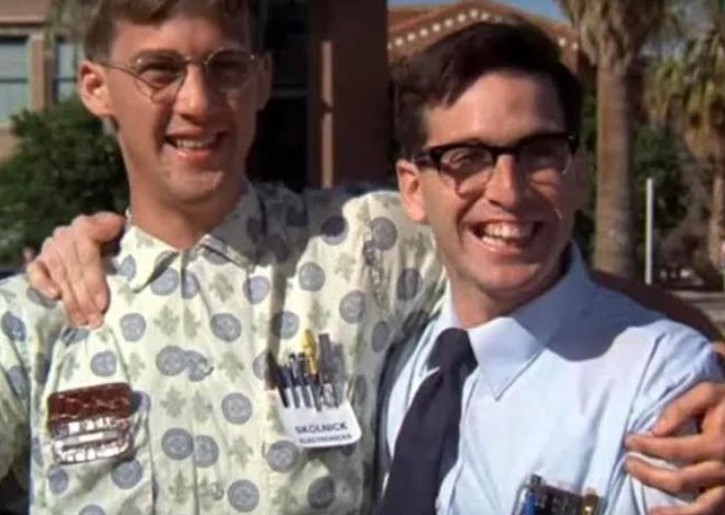
He wasn’t a tabloid fixture. He wasn’t defined by scandal. He was a working actor who moved steadily from decade to decade, familiar and reassuring on screen.
The Grief Behind the Headlines
Tributes quickly followed.
Hilary Duff wrote, “This one hurts. It’s really hard to face this reality about an old friend. I’m deeply sad to learn Bobby was suffering.”
Jake Thomas remembered him as “one of the coolest guys you could ever meet. Funny, pragmatic, sometimes cranky, always a little eccentric.”
His daughter, actress Ever Carradine, offered something quieter and more intimate: ” knew my dad loved me. I knew it deep in my bones.”
That line reframes everything. Beyond roles and diagnoses, there was a father who showed up.
More Than a Career, More Than a Diagnosis
Carradine’s career lasted over 50 years. But in choosing to speak openly about his bipolar disorder, his family ensured that his story would carry another dimension.
Not as a cautionary tale. Not as a spectacle.
As a reminder.
Mental illness can live behind success. It can coexist with talent, humor, devotion, and love. And speaking about it publicly is still, even now, an act of courage.
By saying “there is no shame,” his family did something rare in moments like this: they widened the conversation.
And in doing so, they added something enduring to his legacy — honesty.


