Memory has become the real battleground for AI assistants
For months, the debate around AI focused on model power. That was the wrong fight.
What truly differentiates assistants today is not how well they generate text, but what they remember.
With Gemini and ChatGPT, two philosophies collide head-on.
Behavioral memory versus conversational memory.
This choice is not technical.
It is strategic, economic, and cultural.
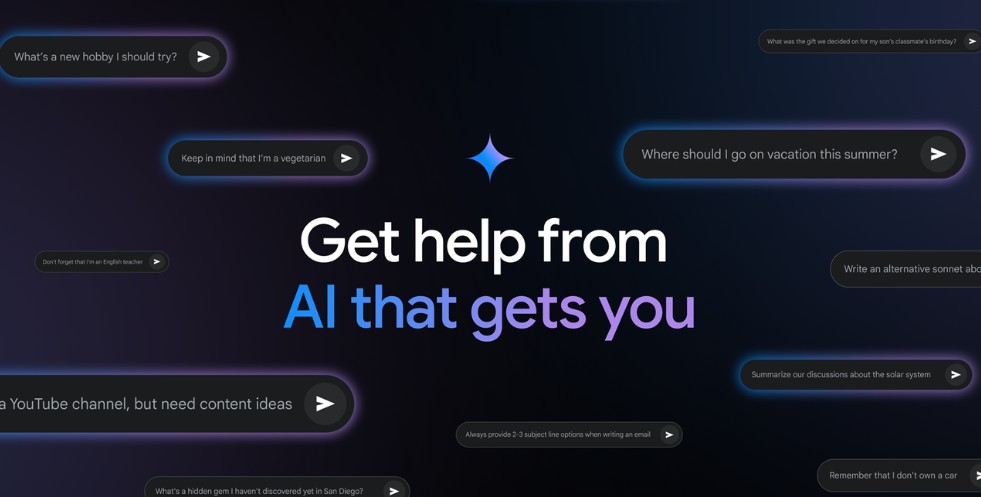
Gemini: an AI built on your real user history
Google did not build Gemini in isolation.
It connected it to what Google knows best: your user history.
In practical terms, Gemini can draw from:
-
Google Search history
-
YouTube watch history
-
long-term interest signals accumulated over years
Key point:
these are not new data sources.
They already power search results and recommendations.
The shift is qualitative, not quantitative.
These signals are now used to generate personalized answers in natural language.
Gemini does not understand you because you talk to it.
It understands you because you already acted.
ChatGPT: voluntary, visible, and limited memory
At OpenAI, the approach is fundamentally different.
ChatGPT’s memory is based on:
-
previous conversations
-
uploaded files
-
explicit user instructions
The advantage is obvious.
Users see what they give.
This memory is:
-
more transparent
-
easier to disable
-
perceived as more respectful of personal data
But it comes with a structural limitation.
ChatGPT only knows what you choose to show it.
It is contextual.
Not behavioral.
Two types of personalization, two relationships to control
This is where the comparison becomes meaningful.
Gemini relies on implicit personalization:
-
driven by past behavior
-
largely invisible to the user
-
highly consistent over time
ChatGPT relies on explicit personalization:
-
driven by direct interaction
-
fragmented
-
dependent on user effort
The result is clear:
-
Gemini anticipates better
-
ChatGPT reassures more
Neither approach is neutral.
They simply shift where control sits.
Why Gemini’s memory feels more unsettling than ChatGPT’s
The discomfort around Gemini is cognitive, not rational.
An assistant that says
“I remember what you told me”
feels acceptable.
An assistant that behaves as if it remembers what you searched, watched, and explored
feels intrusive.
Yet both rely on memory.
The difference is the visibility of the trace.
Gemini exposes what Google has been doing quietly for years.
The real issue is not privacy, but cognitive dependence
Framing this debate as surveillance misses the point.
The deeper risk is this:
-
the more personalized an assistant becomes
-
the less thinking effort it requires
-
the harder it is to replace
An assistant that knows you well:
-
filters information
-
ranks relevance for you
-
reinforces blind spots as much as preferences
This is not spying.
It is delegation.
Google and OpenAI are solving different problems
Gemini aims to become:
-
an extension of the Google ecosystem
-
a persistent, cross-product assistant
-
an intelligence layer built on existing behavior
ChatGPT aims to remain:
-
a standalone tool
-
activated on demand
-
centered on conscious interaction
These models will not converge.
They serve different expectations.
The question no one can answer yet
The Gemini vs ChatGPT comparison does not ask
“which AI is more dangerous?”
It asks something more uncomfortable:
How far are we willing to be understood without having to explain ourselves?
Memory is what makes AI useful.
It is also what makes it difficult to challenge.
And once users choose one model over the other,
that choice will be very hard to undo.