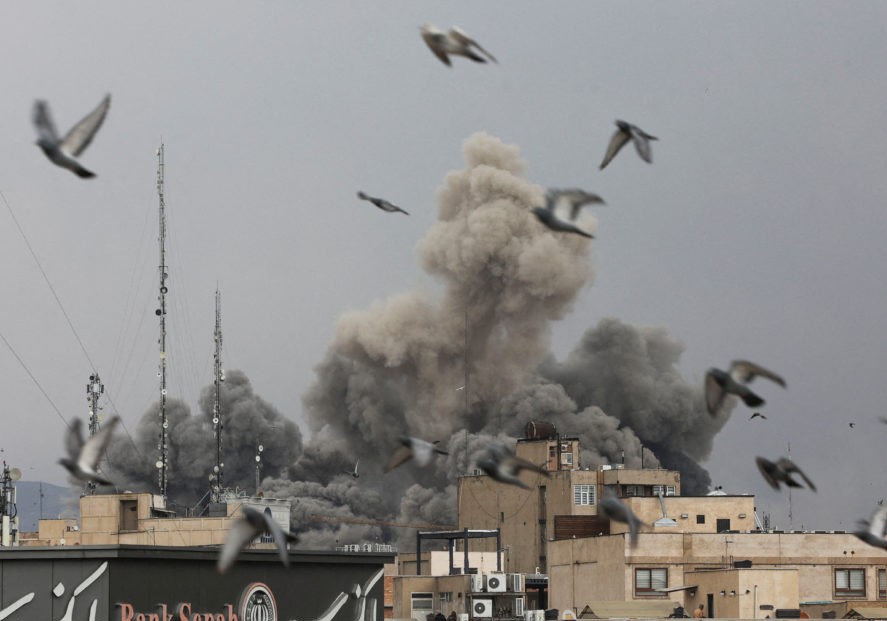
The brutal escalation of tensions in the Middle East has just crossed a critical threshold. Following the outbreak of open conflict involving the United States, Israel, and Iran at the end of February 2026, global energy markets have entered a zone of extreme turbulence. This confrontation, marked by the immediate paralysis of the Strait of Hormuz, has analysts fearing the most devastating oil shock in decades. As the global economy was just beginning to recover from the inflationary pressures of previous years, this new crisis threatens to trigger a global recession and an uncontrollable surge in the cost of living.
The Strait of Hormuz: The Global Economy’s Lifeline Under Fire
At the heart of this crisis is the Strait of Hormuz, a narrow waterway separating Iran from the Arabian Peninsula. This passage is often described as the “jugular vein” of the world economy, and for good reason.
-
A vital artery under embargo: Approximately 20% of the world’s oil supply and an equivalent share of liquefied natural gas (LNG) production pass through this strait.
-
The Iranian retaliation: In response to U.S.-Israeli airstrikes, the Iranian Revolutionary Guards officially banned the passage of all commercial vessels, causing a near-total halt in traffic.
-
Logistical paralysis: Currently, more than 150 tankers and LNG carriers are stranded in open waters, unable to enter or exit the Gulf.
-
The withdrawal of insurers: The situation is aggravated by the immediate cancellation of insurance coverage for vessels operating in the area, making any commercial movement legally and financially impossible.
Energy Markets: An Unprecedented Surge in Prices
As soon as markets opened on March 2, 2026, the reaction of investors was a mix of panic and defensive speculation. The figures reflect the gravity of the situation.
Oil Nears Historic Peaks
Brent crude, the global benchmark, jumped nearly 13% during the first hours of trading, quickly reaching the $82 mark. This is its highest level in 14 months, but experts suggest this is only the beginning. Goldman Sachs, Barclays, and JP Morgan have already revised their projections, warning that if the blockage of the Strait of Hormuz persists beyond a few weeks, the price per barrel could easily cross the symbolic $100 threshold.
Natural Gas: The Invisible Shock
While oil captures the headlines, the natural gas crisis may be even more alarming. European gas prices recorded a staggering 30% to 38% increase in a single day. This explosion is due to the forced shutdown of several production sites in Qatar targets of drone attacks—depriving the market of a crucial LNG source needed to compensate for the lack of Russian gas.
Direct Consequences on Your Wallet
This energy shock is not limited to the dashboards of Wall Street or City of London traders; it is already filtering into the real economy, directly affecting the end consumer.
-
Inflation and Interest Rates: Sustaining energy prices at these levels could add up to 0.8% to global inflation in developed economies. For central banks that were hoping to begin lowering rates, this crisis is a nightmare that could force a new policy of monetary tightening.
-
Transport and Aviation: The aviation sector is on the front line. The sudden spike in kerosene prices has already led to the cancellation of thousands of flights worldwide. On the ground, in the United States, the average price of a gallon of gasoline jumped 11 cents in a single night, marking the start of a period of high tension at the pump.
-
Asia in the Crosshairs: Vulnerability is particularly high in Asia. Countries like Japan and the Philippines rely on the Middle East for nearly 90% of their hydrocarbon needs. A prolonged disruption in supply could paralyze their heavy industries.
Analysis: Toward a New Geopolitical Paradigm?
The involvement of Beau Willimon (the screenwriter of Andor and House of Cards) in the media narrative of this type of conflict—though here it involves a separate Game of Thrones film project—serves as a reminder of how closely reality can mirror fiction in terms of political complexity. The war in Iran is not just a territorial conflict; it is a struggle for control over global energy flows.
Uncertainty is reinforced by the global industrial context. The giant $110 billion merger between Warner Bros. Discovery and Paramount Skydance, for example, shows that even communication giants are preparing for a world where resources are unstable and markets are unpredictable.
An Uncertain Future
The duration of this conflict will be the determining factor. If a rapid de-escalation is negotiated, markets could stabilize after a period of intense volatility. However, if the Strait of Hormuz remains closed and energy infrastructure continues to be targeted, the global economy could enter a phase of lasting recession.
The world of 2026 is discovering, once again, that its prosperity rests on an extremely fragile geopolitical balance in the Middle East.
What do you think will be the first energy-saving measures governments will have to impose if oil exceeds $120?