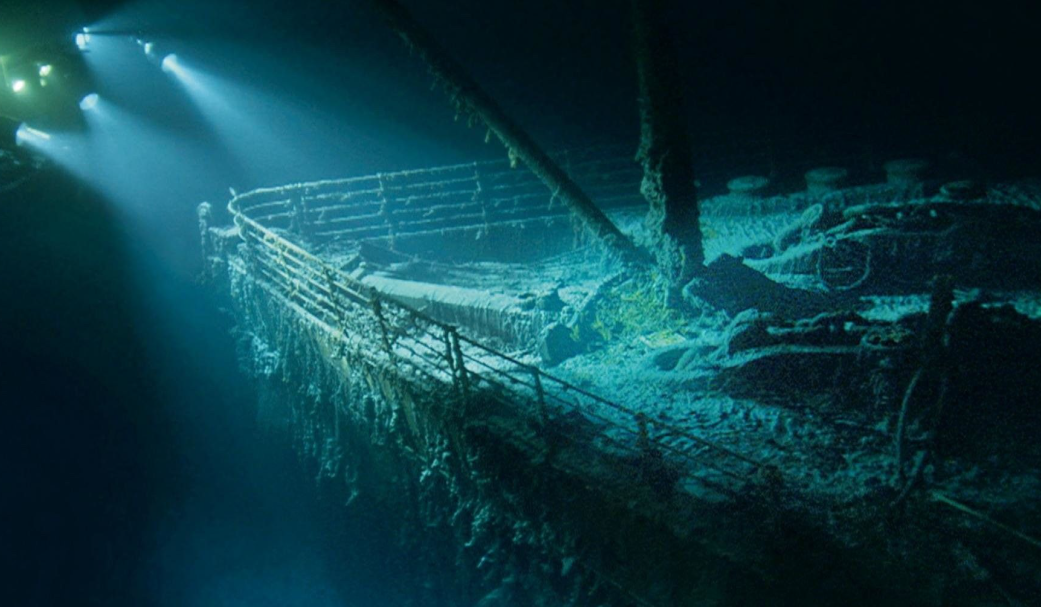
In images of the Titanic, strange orange formations hang from railings and cover the metal. They look like rusty icicles. Behind that appearance is real biological activity: communities of microorganisms are helping transform the wreck.
Yes, bacteria contribute to the Titanic’s deterioration. But they aren’t acting alone, and their presence doesn’t give us a simple countdown to the ship’s disappearance.
A discussion on Reddit brought the question back into circulation. Understanding what’s happening is more interesting than a dramatic deadline, and it changes how you look at images of the wreck.
It’s the kind of curiosity we explore in Enzvia’s Viral section: taking a story that catches people’s attention and explaining what’s behind it.
What Are the Rusty Formations on the Titanic?
These structures are called rusticles, a word combining rust with their icicle-like appearance.
They contain microbial communities involved in transforming iron. They aren’t simply pieces of rust hanging from the hull; they also show evidence of biological activity.
NOAA explains how these formations contribute to the Titanic’s deterioration. Studying how they change helps researchers understand what happens to metal underwater.
The phrase “bacteria are eating the Titanic” is memorable. It describes a process more complicated than an organism steadily nibbling through a piece of steel.
The wreck is an environment where metal, seawater, and living organisms interact.
Why Is the Titanic Still Deteriorating?
There isn’t one cause. Researchers distinguish biological, chemical, and physical processes.
Biological Activity Changes the Metal
Microbial communities on the wreck contribute to its deterioration. Rusticles are among the most recognizable signs of that activity.
Their presence is a reminder that the deep ocean isn’t lifeless. Even in conditions far removed from those at the surface, organisms find ways to survive.
Corrosion Continues Underwater
Cold temperatures and darkness don’t make steel indestructible. The metal remains exposed to chemical changes in its marine environment.
That challenges an understandable assumption: because the ship lies far below the surface, it must be preserved like an object behind museum glass.
Different materials and parts of the wreck can survive differently. That doesn’t mean the entire site stays unchanged.
Structures Gradually Lose Strength
A component can keep its shape while becoming weaker. When it can no longer withstand the forces acting on it, it can fail.
Losing structural strength isn’t the same as losing all the material. A railing doesn’t have to deteriorate completely before it breaks away.
This helps explain why some changes look sudden in photographs, even though the processes behind them have been developing for years.
Part of the Wreck Can Fall Without Disappearing
RMS Titanic Inc.’s 2024 expedition documented the loss of an approximately 15-foot section of railing on the port side of the bow. Survey data identified the fallen section on the seabed.
The distinction is straightforward:
- The railing is no longer in its original position.
- The appearance of the bow has changed.
- The detached material remains at the wreck site.
Saying a feature has been “lost” can mean it has fallen from its original position. It doesn’t necessarily mean it has dissolved completely.
For a researcher monitoring a structure, that change matters enormously. For someone asking when every trace of the Titanic will disappear, it answers only part of the question.
Can We Predict When the Titanic Will Disappear?
First, we need to define “disappear.”
| Description | What It Can Mean |
|---|---|
| Loss of a feature | A component falls from its original position |
| Structural collapse | A deck or section of hull can no longer support itself |
| Loss of the recognizable outline | The wreck becomes harder to recognize |
| Loss of material | The material itself is transformed or dispersed |
These changes don’t necessarily happen together.
A hull can collapse while substantial components remain. Part of a wreck can become difficult to recognize without all its material disappearing.
That’s why an estimate about one structure shouldn’t be presented as the date when the entire Titanic will be gone.
A striking number is only useful when you know exactly what it measures.
Why a Pounds-Per-Day Calculation Isn’t Enough
Online discussions sometimes take an estimated daily rate of metal loss and compare it with the ship’s mass.
The calculation sounds straightforward: divide the amount of material by the daily loss to get a timeline.
But that assumes the rate stays constant and that different parts of the ship deteriorate in comparable ways.
Before repeating a result, you would need to establish:
- Where the estimate came from and when it was made.
- Which parts of the wreck it describes.
- Which materials it includes.
- What assumptions support extending that rate into the future.
You also need to check that the figures represent comparable measurements. Maritime tonnage doesn’t always measure the weight of metal.
A calculation can be mathematically correct while answering the wrong question.
How Do Researchers Track Changes?
A compelling photograph isn’t enough to establish how a wreck is changing. Researchers need to know where it was taken and compare it with earlier observations.
Expeditions use cameras, sonar surveys, and mapping techniques to document the site. The goal is to locate the same features again and measure what has changed.
In its account of the scientific effort to map the Titanic, the Woods Hole Oceanographic Institution describes another complication: better cameras and lighting can make existing damage more visible.
Two images that look different don’t automatically prove deterioration happened between them. Camera angle, resolution, and the area being shown all matter.
These tools also demonstrate how technology changes our understanding of places that are difficult to reach, a theme we explore in Enzvia’s coverage of digital tools and technology.
How to Look More Closely at a Titanic Video
The next time a video says the Titanic is “disappearing,” look for three details:
- When the footage was recorded. It may be much older than the post.
- Which part of the ship it shows. You need to know what’s being compared.
- What kind of change is being described. Better visibility, a detached component, and material deterioration aren’t interchangeable.
Those checks help separate a documented observation from an attention-grabbing caption.
The Titanic continues to change. Bacteria contribute, corrosion continues, and weakened structures evolve. What makes the subject fascinating is the connection between history, biology, and exploration: a shipwreck that became an archaeological site is still teaching us about the deep ocean.
Keep Your Curiosity Going
Enjoy understanding what’s behind a story making its way around the web? Enzvia Signals brings you useful discoveries, new apps, free tools, and practical tips to keep learning and find ways to save money.
Join curious readers and get fresh ideas worth exploring. Subscribe below.