At a point in her career when everything seemed to pull her closer to Hollywood, Millie Bobby Brown made a quieter, more structuring choice. Not a statement. Not a provocation. A relocation that subtly reshaped how she exists in public.
A Georgia farm as an anchor, not a backdrop
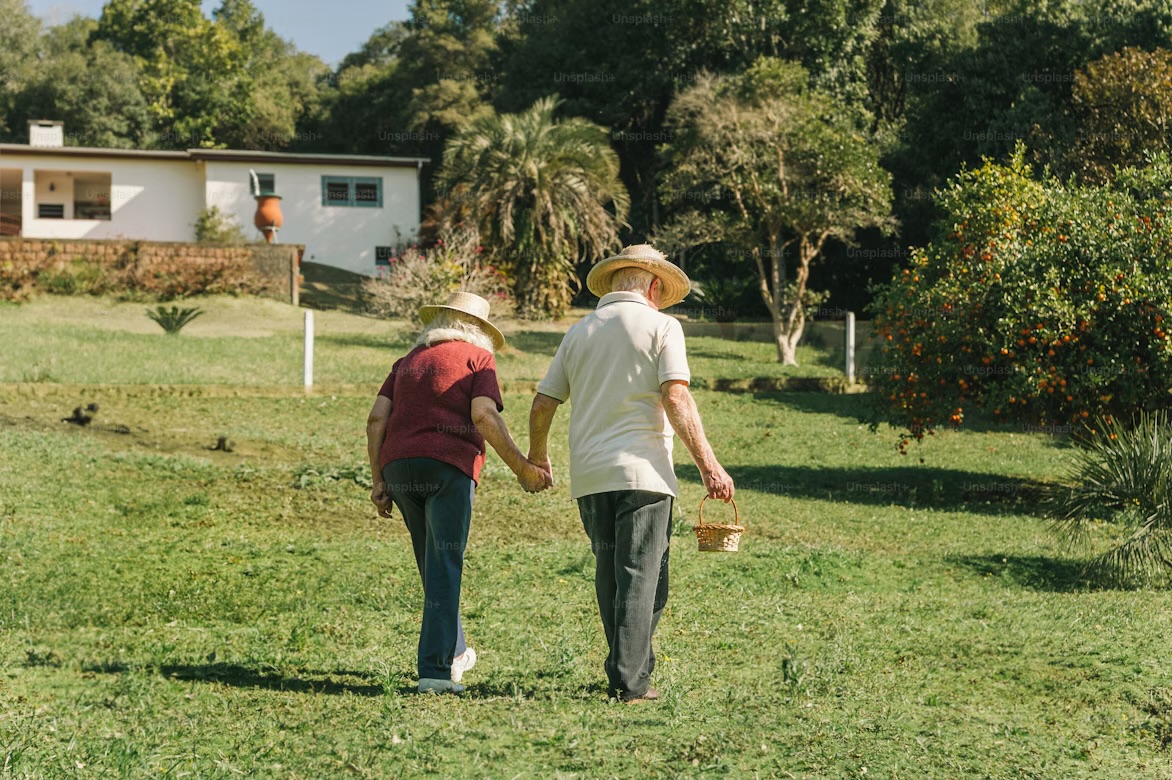
Millie Bobby Brown’s move to a farm in rural Georgia is not a lifestyle aesthetic or a temporary escape. It is a living environment that comes with real, non-negotiable constraints. By placing physical distance between herself and traditional media hubs, she naturally reduces passive exposure, spontaneous appearances, and the constant friction of public scrutiny.
The effect is structural. Visibility doesn’t disappear, but it becomes intentional. Public moments are chosen rather than inherited. Celebrity shifts from a continuous stream into a sequence of controlled appearances, shaped by distance rather than availability.
Animals at the center of Millie Bobby Brown’s daily life
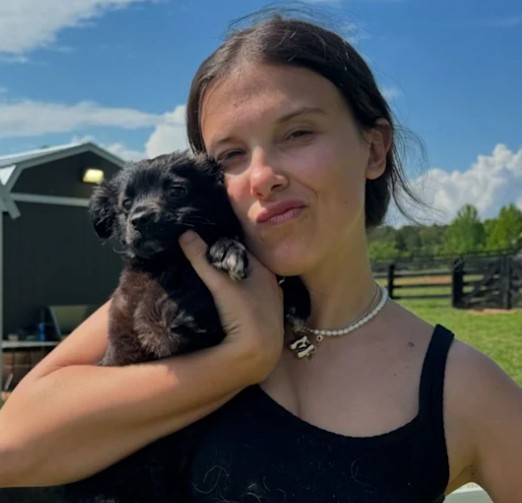
The farm only makes sense when viewed through her relationship with animals. Horses, dogs, donkeys, rescued animals. They are not accessories or symbolic props. They organize her time, her responsibilities, and her daily priorities.
Millie Bobby Brown has spoken about this attachment as commitment, not leisure. Animals impose routines, care, and continuity. They operate on a rhythm that resists acceleration and ignores attention cycles. This reality stands in direct contrast with the performance-driven logic of the entertainment industry.
Care replaces output. Responsibility replaces spectacle.
Showing life without turning it into a content machine
She does not hide this part of her life. She shares it sparingly. The difference is editorial, not moral. The farm is never turned into a serialized narrative or an ongoing storyline. It exists as a stable background, not a sequence of moments engineered for engagement.
That restraint reshapes how the story is received. Without constant updates or emotional peaks, speculation loses momentum. The private life stops being extractable content and becomes a fixed context. Coherence replaces drama as the primary signal.
A different way of inhabiting celebrity
This lifestyle reflects a specific approach to fame. Millie Bobby Brown neither retreats entirely nor attempts to maximize exposure. She redraws the boundaries of participation. The choice of location, the centrality of animals, and the control over what is shown are all parts of the same logic: reclaiming tempo.
Living away from permanent spotlight inevitably means less immediate visibility. Fewer appearances. Fewer headlines. Fewer moments engineered for reaction. In return, the public image becomes more stable, less reactive, and less dependent on constant noise.
Why this narrative resonates with audiences
The appeal lies in contrast. Expectations for a global star of her age lean toward acceleration and excess. Instead, Millie Bobby Brown presents a life built around repetition, care, and responsibility.
This is not a story of withdrawal. It is a story of recalibration. It does not inspire through spectacle. It reassures through continuity. In an attention economy dominated by over-optimized personal brands, stability itself becomes distinctive.
Private life as an implicit editorial choice
In Millie Bobby Brown’s case, privacy is neither locked down nor commodified. It is structured. The farm, the animals, and the discretion form a coherent narrative frame that is difficult to caricature and poorly suited to viral exploitation.
This media counter-model does not oppose the system head-on. It neutralizes its most worn-out reflexes. By centering land, care, and continuity, Millie Bobby Brown demonstrates that another way of being visible is possible, one that is readable, durable, and grounded in lived reality rather than constant performance.