
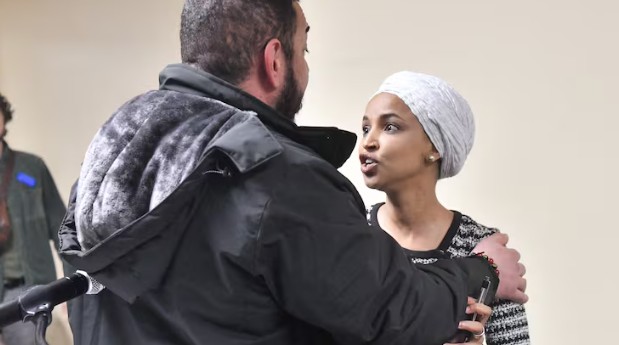
U.S. Representative Ilhan Omar was once again placed at the center of a security response after a man was charged for running aggressively toward her during a public event. The individual was intercepted by security before any physical contact occurred. No one was injured.
The incident, brief on the surface, is nevertheless treated as serious by federal authorities. Not because of its outcome, but because of what it signals.
Why this incident is not considered isolated
U.S. law enforcement does not assess only outcomes, but security breaches. Crossing a protected perimeter and rapidly approaching a sitting member of Congress automatically triggers a law-enforcement response, even in the absence of a weapon or physical contact.
This type of behavior matches patterns identified in past political attacks: sudden movement, unpredictability, and limited reaction time. For security services, waiting to determine intent in real time would represent a failure of prevention.
A lawmaker who has been repeatedly targeted
Ilhan Omar is not a marginal figure in American public life. Since entering Congress, she has been among the lawmakers who report a high volume of threats, both online and offline.
This is not a matter of opinion. It has resulted in concrete security adjustments during her public appearances, similar to measures applied to other elected officials deemed at higher risk. These precautions are not tied to a single controversy, but to an accumulated record of threats and incidents.
Threats against elected officials: a measurable trend
According to data from the U.S. Capitol, reported threats against members of Congress have increased sharply in recent years. This rise affects lawmakers across parties, but certain profiles are statistically more exposed: highly visible figures, elected officials from visible minorities, and those frequently referenced in national political debates.
In this context, security policy has shifted from reacting to attacks to preventing ambiguous situations, where intent can only be assessed after the fact.
What prosecutors are trying to determine
At this stage, authorities have not confirmed the man’s motive. No public evidence supports a political, ideological, or personal explanation. The investigation is focused on legally qualifying the behavior itself: unauthorized entry, implicit threat, and endangerment of an elected official.
This caution is deliberate. Prosecutors are avoiding premature conclusions until the factual record and the individual’s background are fully established.
Holding office under constant constraint
The incident highlights a reality that often remains invisible: for some elected officials, public service now comes with permanent vigilance. Public appearances are tightly managed, movements monitored, and access to events strictly controlled.
This is no longer an exception, but an adaptation to a political climate where the line between protest and intimidation has increasingly blurred.
In that sense, the case says less about one individual who was charged, and more about the level of risk that is now structurally embedded in contemporary American political life.


