Quentin Tarantino has not taken a major on-screen role outside his own projects since From Dusk Till Dawn. That gap alone makes Only What We Carry more than routine casting news.
Tarantino’s public identity has been tightly curated for decades: director, screenwriter, archivist of cinema history. Acting was never central to his brand. His appearances tended to function as extensions of his directorial control.
This time, he is stepping into a film he did not write or direct.
That distinction matters. When an auteur known for absolute creative authority chooses to operate inside someone else’s vision, it signals either experimentation or recalibration. Possibly both.
For a filmmaker who has repeatedly stated he intends to retire after his tenth feature, every creative move now carries interpretive weight.
What is Only What We Carry actually about?
The upcoming drama, written and directed by Jamie Adams, centers on unresolved grief and buried truths. The story unfolds around a château setting, suggesting an intimate, character-driven structure rather than spectacle.
Tarantino plays Julian’s publisher. The cast also includes Simon Pegg, Sofia Boutella, Charlotte Gainsbourg, Liam Hellmann, and singer-songwriter Lizzy McAlpine.
Thematically, the material leans toward emotional excavation rather than genre theatrics. That tonal direction is important. Tarantino is not returning in an explosive, self-referential performance. He is entering a restrained dramatic space.
That choice alone reframes expectations.

Why pairing Tarantino and Simon Pegg is strategically smart
Simon Pegg’s career has evolved from cult comedy figure to versatile dramatic performer. He carries mainstream recognition without overwhelming auteur baggage.
Tarantino, by contrast, arrives on screen with decades of cinematic mythology attached. Viewers do not simply see him as an actor. They see the director of Pulp Fiction, Inglourious Basterds, and Django Unchained.
Placing both in the same dramatic environment creates layered audience curiosity. It bridges cinephile culture and broader commercial audiences without leaning on franchise logic.
From a positioning standpoint, that’s efficient casting.
Is this connected to Tarantino’s rumored tenth and final film?
Tarantino’s long-standing claim that he will stop directing after ten films has become part of his legend. Whether that promise holds remains uncertain. Directors rarely exit cleanly from cultural relevance.
What is observable, however, is timing.
Production on Only What We Carry has wrapped, and the project is preparing for international sales positioning in Berlin. That suggests confidence in its market viability and signals that this is not a side experiment buried quietly.
If Tarantino is reassessing his path toward a final feature, stepping into acting offers strategic flexibility. It allows continued cultural presence without the scale and pressure of directing a full production.
There is no confirmed link between this project and his directorial future. But the proximity in timing makes industry observers pay attention.
Why this role could reshape Tarantino’s late-career narrative
When established directors act in serious dramatic roles later in their careers, perception shifts in one of two directions.
If the performance lands, audiences begin to separate the myth from the individual. The filmmaker becomes more human, less untouchable. That softens the “auteur monument” narrative and expands creative latitude.
If it falters, it reinforces the idea that their authority belongs strictly behind the camera.
Either outcome contributes to legacy construction.
The global box office in 2025 remains dominated by franchise ecosystems and IP extensions. Against that backdrop, a contained, emotionally driven drama featuring Tarantino on screen feels almost countercyclical. It is not spectacle-driven. It is personality-driven.
That makes it culturally interesting.
Why one image matters
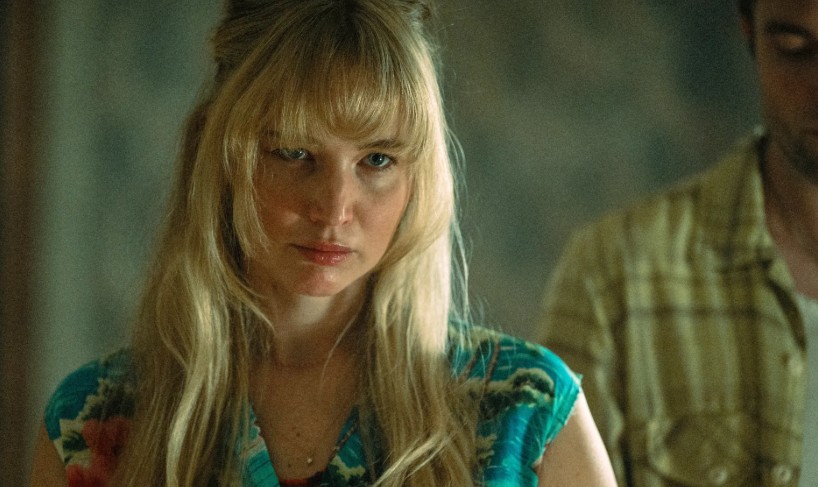
The first released still is not explosive. There is no stylized violence, no hyper-saturated homage to exploitation cinema. The tone appears measured.
That restraint is precisely the point.
For nearly three decades, Quentin Tarantino has operated as a cinematic force from behind the lens. By stepping back in front of it, under someone else’s direction, he reintroduces unpredictability into his career narrative.
In an industry obsessed with predictable IP cycles, unpredictability still has value.
And that is why this is more than a cameo.