
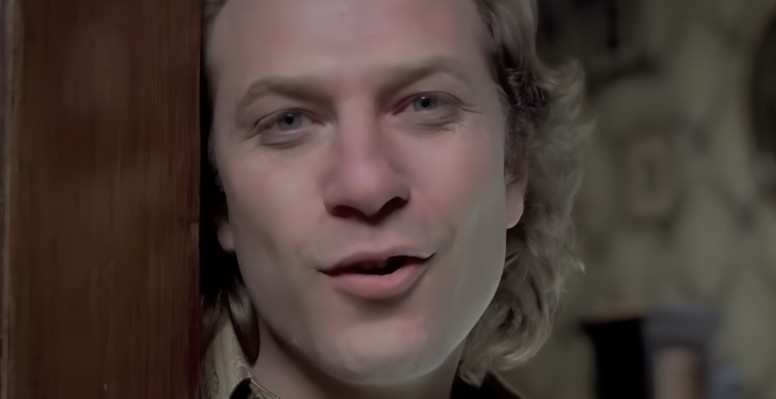
In 1991, the film was celebrated as a masterpiece of psychological thriller. Five major Academy Awards, immediate cultural impact, performances that became iconic. More than three decades later, it is once again at the center of discussion — but for a different reason: its portrayal of gender.
Why is a universally acclaimed classic now being reexamined through the lens of identity and representation?
What Did the Film Actually Say About Buffalo Bill?
The core of the controversy lies with Buffalo Bill.
In the film, he kidnaps women and attempts to create a “skin suit.” One now-infamous scene shows him dancing in front of a mirror, mimicking a bodily transformation. That sequence, in retrospect, concentrates much of the criticism.
However, the script makes a specific narrative point: Buffalo Bill is not portrayed as a transgender woman. The dialogue explicitly states that he does not meet the clinical criteria for gender dysphoria and that his desire to transform stems from severe psychological disturbance.
The film draws a distinction in words.
The image, however, has often proven more powerful than the dialogue.
Why Has the Interpretation Shifted Over Time?
In 1991, public discourse around transgender representation in media was limited and largely absent from mainstream debate. Cultural sensitivities were structured differently.
Today, the landscape has changed dramatically:
Gender identity is central to cultural and political conversations.
Trans communities have far greater visibility and advocacy platforms.
Past portrayals are being reassessed in light of their broader symbolic impact.
The film has not changed.
The audience has.
This phenomenon is not unique. Many works from the 1980s and 1990s are being revisited under contemporary standards. The difference here is that The Silence of the Lambs is a canonical film, which makes the discussion more charged.
Can a 1990s Film Be Judged by 2026 Standards?
This is less a moral question than a methodological one.
Should a film be analyzed strictly within its historical context, or through the lens of its lasting cultural impact?
Defenders argue that the character represents an extreme pathological case, not a community. Critics counter that, in an era when positive or nuanced transgender representation was nearly nonexistent, linking transformation imagery with violent psychopathy may have reinforced harmful associations — regardless of the script’s disclaimers.
Intent and impact are not always aligned.
Recognizing that distinction is central to understanding the debate.
Does the Controversy Weaken the Film’s Legacy?
From a cinematic standpoint, no.
The performances of Anthony Hopkins and Jodie Foster remain studied in film schools. The film’s structure, pacing, and psychological tension are still benchmarks in the genre.
What has changed is not its technical standing, but how it is framed in discussion.
It is no longer examined solely as a model thriller.
It is also discussed as a case study in representation.
And that dual reading may ultimately reinforce its relevance rather than diminish it.
What This Debate Ultimately Reveals
The renewed controversy around The Silence of the Lambs says as much about the present as it does about the past.
It reflects:
A rapid evolution in cultural sensitivity
Heightened awareness of minority representation
An ongoing tension between artistic fiction and social symbolism
This is not a retroactive trial.
It is a cultural reexamination.
If the debate persists decades after the film’s release, it may be because truly influential works do not fade quietly. They continue to provoke, to be questioned, and to be reinterpreted — long after audiences believed they had already understood them.


