
A cheaper rental can make moving look appealing. Before comparing two listings, though, you need to understand what the figures measure and which expenses you’ll pay on top of the rent.
Regional averages are a starting point, not a guaranteed price for the next available home. Neighborhood, property size, condition, and included bills can change the budget considerably.
Here’s how to interpret the latest UK figures and turn them into a useful comparison. If you’re considering several countries, our guide to the cost of living in Canada by province and city offers another geographical perspective. Keep the different methods and currencies in mind.
What Is the Average Rent in the UK?
The Office for National Statistics release published on November 18, 2026, reports these average monthly private rents:
- United Kingdom: £1,411, a provisional estimate for October 2026.
- England: £1,472, October 2026.
- Wales: £849, October 2026.
- Scotland: £1,015, October 2026.
- Northern Ireland: £876, August 2026.
These figures describe rent for a property, not a person’s or family’s complete living costs.
Comparisons between UK countries require care. Reference periods and data collection differ, particularly for Northern Ireland and Scotland. The official ONS private rent bulletin explains these limitations.
London and the North East: Two Very Different Benchmarks
Among English regions, the ONS reports average monthly rent of £2,350 in London, compared with £793 in the North East, in October 2026.
The difference is £1,557 per month, or £18,684 over 12 months. That’s a difference between regional averages, not a saving every household would achieve by moving.
Original Enzvia Chart
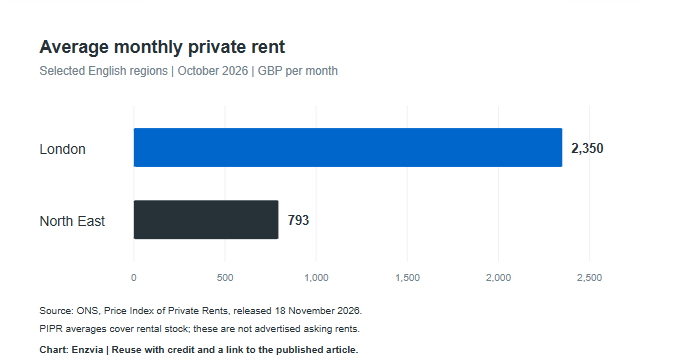
Source: ONS Price Index of Private Rents, released November 18, 2026. Chart: Enzvia. These figures describe average private rents, not advertised asking rents.
Why Your Search Results May Look Different
Regional averages don’t describe one specific type of available home. You might be searching for a one-bedroom apartment near a train station, a family house, or a room in shared accommodation.
Define your requirements before comparing:
- Number of bedrooms.
- Entire property or individual room.
- Furnished or unfurnished.
- Neighborhood or maximum distance.
- Access to transportation.
- Bills included or paid separately.
Then compare listings that meet the same criteria. A room with bills included and an entire apartment without utilities may show a dramatic price difference, but they don’t offer a useful like-for-like comparison.
Save several comparable listings for each destination. That gives you a clearer picture of what your budget can actually secure.
Check Whether the Price Is Weekly or Monthly
UK listings may use “pcm”, meaning per calendar month, or “pw”, meaning per week.
To convert weekly rent into an annualized monthly average, use:
Weekly rent × 52 ÷ 12.
In this hypothetical example, rent of £250 per week works out to:
£250 × 52 ÷ 12 = £1,083.33 per month on average.
Simply multiplying by four would give you £1,000 and understate the annual budget by £1,000.
This conversion helps with comparisons. Your actual payment schedule is the one specified in the rental agreement.
Add the Costs That Come With the Property
Once you’ve established the rent, ask exactly what’s included. A “bills included” listing still deserves a detailed breakdown, especially if usage limits apply.
Check:
- Energy and heating.
- Water, according to local arrangements.
- Internet.
- Council Tax or rates in Northern Ireland, depending on your circumstances.
- Transportation.
- Parking, if needed.
- Insurance for your belongings.
The MoneyHelper guide to working out what you can afford to rent explains why costs beyond rent matter.
Review recurring expenses before moving, too. Our method for finding subscriptions you no longer need can help clarify which charges will continue after you’ve settled in.
Lower Rent Doesn’t Always Mean a Lower Total Budget
Consider this hypothetical scenario, designed to demonstrate the calculation. These amounts are not market estimates.
Property A
- Rent: £1,100.
- Other housing bills assumed for this example: £250.
- Transportation: £80.
- Subtotal: £1,430 per month.
Property B
- Rent: £950.
- Other housing bills assumed for this example: £280.
- Transportation: £220.
- Subtotal: £1,450 per month.
Property B costs £150 less in rent, but its subtotal is £20 higher.
This example doesn’t include groceries or every personal expense. It shows why you need to compare a consistent set of costs, then consider commuting time and everyday practicalities.
Separate Monthly Costs From Move-In Cash
Your first month may require more available cash than an ordinary month.
Prepare a separate list for:
- The requested deposit.
- Rent payable before moving in.
- Moving costs.
- Furniture you need.
- Any setup costs.
- An overlap between your old and new homes.
A deposit isn’t the same as a monthly expense, but it ties up money at the start.
Rental and deposit rules differ across the UK’s countries. Check the rules that apply to the property’s location before transferring money or signing.
How Much Income Do You Need to Pay the Rent?
Turning an average rent figure into a universal “comfortable income” would be misleading.
For everyday budgeting, start with your actual take-home income and subtract household expenses: housing, groceries, transportation, childcare if applicable, repayments, and planned savings.
Also establish how many people will contribute. One person’s income and two combined incomes describe different situations.
A rent-to-income ratio can provide an initial reference point. It doesn’t replace this calculation: two households earning the same amount may have very different expenses.
Build a Comparison You Can Update
Create a worksheet for each destination using the same property type, expense categories, and listing dates.
Record unknown costs instead of replacing them with an overly precise estimate. A bill you still need to confirm should remain visible in your decision.
For more help organizing everyday spending, explore our Money guides on expenses and budgeting.
Regional data helps you decide where to search. Comparable listings and your complete budget help you decide where to live.
Comparing destinations with someone else? Share this guide so you can work from the same criteria.